
Unreal Tournament at 25 Retro Review: The Arena Shooter That Changed Gaming
Twenty-five years ago, Epic Games released Unreal Tournament—launching the exact same day as Quake III Arena. The rivalry began, and arena shooters were never the same. We look back at the weapons, maps, and memories that made UT99 a masterpiece, plus where you can still play it today.

Twenty-five years ago, on November 22nd, 1999, Epic Games released Unreal Tournament—and promptly started one of gaming's greatest rivalries by launching the exact same day as id Software's Quake III Arena.
I was there, sitting at my desk with my new GeForce 256 (the first GPU to call itself a "GPU"), back from the local shop, where they sold computer games in what now seems almost as big as shoe boxes. I can still smell them when I close my eyes.
Back then we used to carry our insanely bulky towers together with rock-heavy CRT monitors to each other's houses. Nobody asked about energy ratings back then, luckily.
If you were there, you know. If you weren't, you missed something special.
Online gaming was basically non-existant (apart from a few select games like Starcraft, that already had a lobby function). So the best you could do in the area of multiplayer games was getting together with your mates or to go to a lan party. Now, lan parties were quite rare in our neck of the woods, instead we spent whole weekends in basements or lofts. Looking back, Unreal Tournament was one of the games that pretty much started multiplayer gaming for us.
Twenty-five years later, we take UT99s birthday as an opportunity to look back at what made it not just a great game, but a defining moment in FPS history.
The Perfect Storm
Unreal Tournament didn't invent the arena shooter—Quake did that. It didn't even have the most innovative tech—Half-Life had shown everyone what narrative FPS could be the year before. What UT99 did was take every good idea floating around in 1999 and execute them perfectly.
The Weapons Were Art
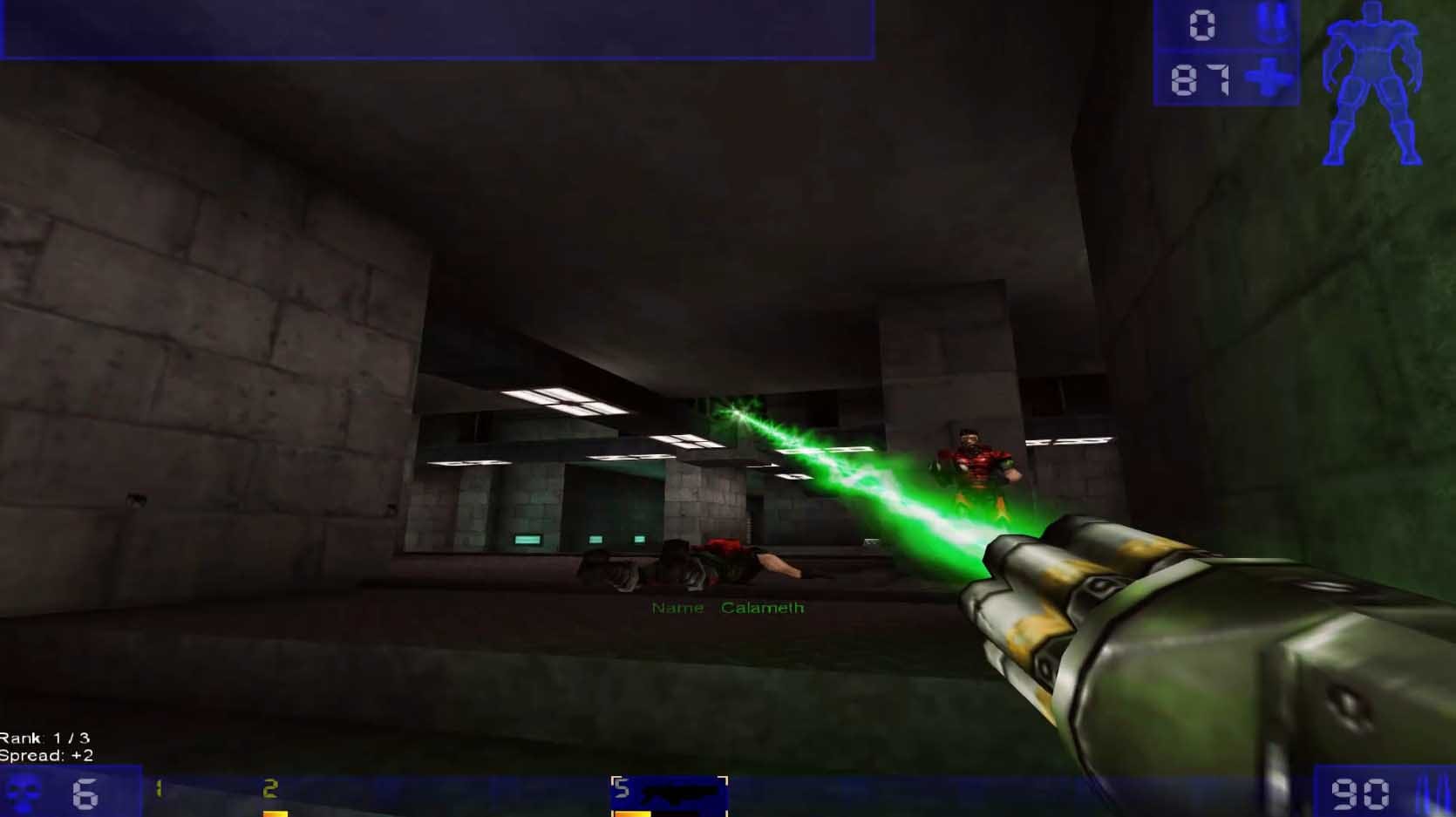
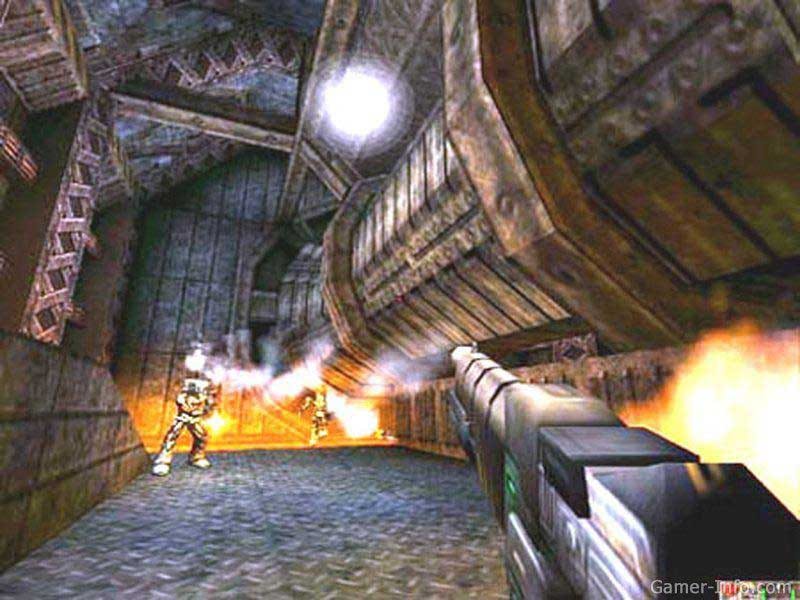
Every weapon in UT99 felt distinct, powerful, and skill-based. The Shock Rifle's combo attack—fire a slow-moving energy ball, then detonate it mid-air with the beam—was pure genius. Miss the timing and you've wasted both shots. Nail it and your opponent disintegrates in a purple explosion while "COMBO WHORE!" flashes on screen.
The Flak Cannon turned narrow corridors into absolute carnage. The Rocket Launcher's spiral fire mode let you paint the sky with six rockets at once. Even the starting Enforcer pistols, when dual-wielded, could shred opponents who got cocky.
But the crown jewel? The Redeemer. A shoulder-mounted tactical nuke that you could either fire and forget, or guide in first-person view like some demented missile-cam. Nothing—and I mean nothing—settled arguments quite like a well-placed Redeemer shot. The kill feed would light up with five, six, seven names, and everyone on the server would simultaneously type "WTF" in chat.
Movement Was Everything
You didn't just walk in UT99—you flew. Dodge-jumping, wall-jumping, hammer-jumping, rocket-jumping—the skill ceiling for movement alone was absurd. Watch old tournament footage and you'll see players bouncing around maps like pinballs, barely touching the ground, landing mid-air Shock combos that should've been physically impossible.
Let’s just say the physics were exploitable in the best way. Learn the angles and you could launch yourself across entire maps. Master the dodge mechanic and you'd weave through rocket spam that should've killed you three times over.
This wasn't just about getting from A to B faster—movement was combat.
The Maps
Facing Worlds (CTF-Face)
Two towers. A walkway. The black void of space between them. Facing Worlds became the UT99 map, the one everyone remembers, the one that defined what CTF could be. Grab the enemy flag, dodge sniper fire crossing the walkway, make the run back while your entire team provides covering fire.
A simple concept but absolutely perfect execution.
Deck 16
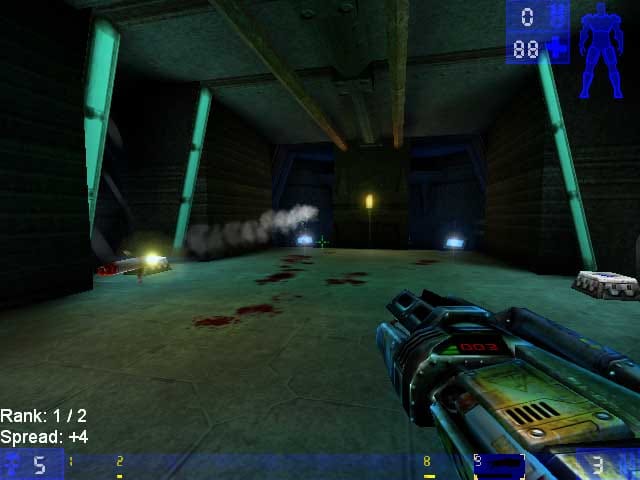
Close-quarters brutality on a space station where the Flak Cannon reigned supreme and you learned very quickly to check your corners. The multiple levels, the tight corridors, the constant threat of someone dropping behind you with a fully-charged Bio Rifle shot—Deck 16 was controlled chaos.
Morpheus
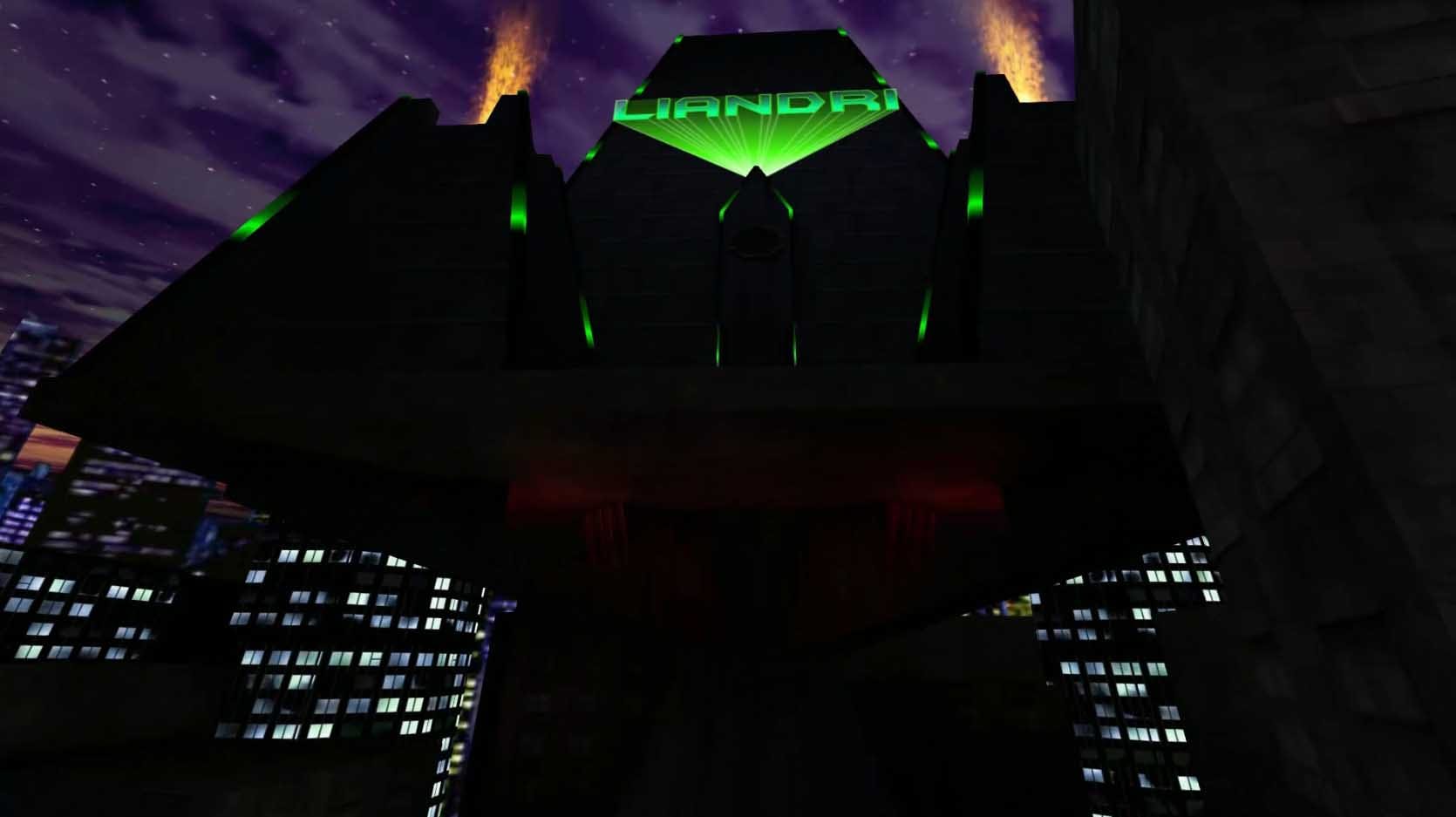
Rooftop combat across a futuristic city at night, neon signs glowing, the Redeemer spawning on a central tower that everyone fought over. The long sightlines made it sniper paradise, but get caught in the open and you'd eat a rocket.
The Assault Maps
Overlord (storming the D-Day beach), Frigate (taking a docked ship), Guardia (the moving train heist)—these asymmetric objective maps were utterly unique. One team attacks, one defends, timer running. Then you swap and the new attackers have to beat the previous time.
No other shooter was doing anything like this in 1999.
The Soundtrack
We need to talk about the music because it mattered. Michiel van den Bos, Starsky Partridge, Andrew Sega—they created a soundtrack that didn't just complement the game, it became the game.
"Foregone Destruction" on the title screen set the tone immediately: industrial, aggressive, relentless. "Go Down" accompanied you through blood-soaked arenas. "Mechanism Eight" played during Morpheus matches, all atmospheric synths and driving beats.
The Modding Revolution
This was before Steam Workshop made modding accessible to everyone. Installing UT99 mods meant downloading sketchy .zip files from FilePlanet or ModDB, extracting them to specific folders, editing .ini files if you were brave enough.
The community didn't care. They built:
- Total conversions (Tactical Ops, Operation Na Pali)
- Insane mutants (low gravity, instagib, rocketarena)
- Hundreds of custom maps
- New game modes
- Entire texture packs
The Unreal Engine's accessibility meant anyone with dedication could create content. Some of those community maps were better than the official ones. Some of those mods became full games.
The Competition That Made It Better
Releasing the same day as Quake III Arena should've been suicide. Instead, it made both games better. The PC gaming community split into camps: Quake purists loved Q3A's faster movement and simpler weapon set. UT fans preferred the variety and tactical depth.
LAN parties became religious arguments, magazine reviewers had to pick sides, forum wars raged for years.
The Predecessors
Unreal Tournament wasn't Epic's first game, but it put them on the map as a multiplayer powerhouse. The tech they developed—the Unreal Engine—went on to power hundreds of games. Gears of War, BioShock, Mass Effect, Borderlands, Fortnite—all built on foundations laid by the original Unreal and refined in UT99.
The game itself got sequels: UT2003, UT2004 (the fan favorite), UT3, and the abandoned UT4 pre-alpha. Each brought something new, but none quite captured the raw, perfect execution of the original.
Arena shooters don't dominate multiplayer anymore. Battle royales, hero shooters, and extraction shooters rule now - But everything they do—the movement mechanics, the weapon variety, the map design philosophy—traces back to games like UT99.
Every time you dodge-slide in Apex Legends, that's UT99's DNA. Every time a game gives you distinct weapons with specific roles, that's what UT99 perfected. Every time developers talk about "skill-based gameplay" and "high skill ceiling," they're describing what arena shooters achieved 25 years ago.
Can You Still Play It?
Yes - and it's completely free.
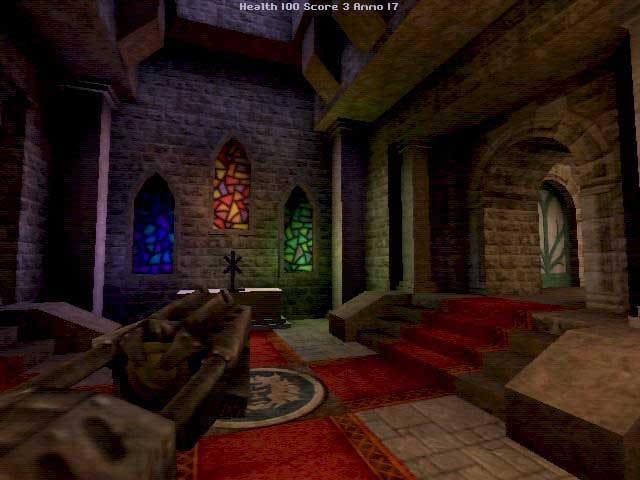
After Epic abandoned active development in 2017, they handed Unreal Tournament over to the community. You can download the pre-alpha version (UT4) absolutely free from the Epic Games Launcher, or grab the community-maintained versions of UT99 from OldUnreal.com.
The OldUnreal community patch (469d) keeps UT99 running perfectly on Windows 10/11, adds modern resolution support, and fixes compatibility issues. Active servers still exist, the bots remain excellent, and LAN parties are gloriously viable.


The people still playing online have been fragging since 1999, so don't expect to dominate competitive matches. But sometimes it's just nice to boot up Facing Worlds, grab a Shock Rifle, and remember when multiplayer gaming was this pure.
The Verdict: A Masterpiece That Changed The Way We Play Multiplayer Games
Unreal Tournament didn't just succeed—it defined what competitive multiplayer FPS could be. It proved you could have accessibility and depth. It showed that weapon variety enhanced rather than diluted skill. It demonstrated that great map design and tight movement mechanics mattered more than graphical fidelity.
Twenty-five years later, it's still worth playing—not as a curiosity or a museum piece, but as a genuinely excellent shooter that holds up because the fundamentals were always perfect.
Happy birthday, Unreal Tournament. Thanks for the memories, the LAN parties, the forum arguments, and the hundreds of hours spent trying to master the Shock combo.
GODLIKE.
What are your UT99 memories? Favorite map? Best frag? Share them below.